Trending

If you have ever been woken at two in the morning by a sound like a child in distress coming from a suburban garden, you have heard a vixen. It is one of the strangest noises in British wildlife, and it always means the same thing: the fox year has shifted up a gear. Foxes are with us all year round, but their breeding cycle is surprisingly tight, and once you know its shape you can predict almost everything that follows — when cubs appear, when they start making a nuisance of themselves on the lawn, and when they quietly disappear.
There is no truly quiet month for foxes, but breeding is seasonal. In Britain the main window runs from late December through February, with most matings in January and February. The build-up starts in December, when dog foxes begin ranging more widely, scent-marking fences and hedgerows, and turning up in corners of the neighbourhood they ignore for the rest of the year.
Resident vixens also become less tolerant of strangers, and you may notice a settled pair sitting out together on a shed roof or at the end of a garden. Cold, still, clear nights in January are the peak for noise. A useful rule of thumb: screaming in mid-January usually means cubs in March.
The vixen's scream is an advertisement, not a cry for help. It is a three-part shriek, repeated, and it carries an extraordinary distance at night. Alongside it you will hear the flat bark of dog foxes and a chattering, almost mechanical sound as a pair squabble and circle each other.
Mating itself is brief, and afterwards the pair often remain tied together for a while. This is normal and neither animal is in trouble, so leave them be. Late winter is also scrapping season: dog foxes fight over access to vixens, and torn ears and patchy fur are common in February. If the noise is keeping you awake, remember it lasts a matter of weeks. Going out with a torch usually just pushes the animals further away and prolongs things.
Pregnancy lasts roughly seven to eight weeks, so matings in mid-January produce cubs in early to mid-March. Through February the vixen sorts out an earth. She will often use an existing one, but in towns she is just as happy under a shed, beneath decking, or in a bank of logs, and she may prepare two or three so she has somewhere to move the litter if she is disturbed.
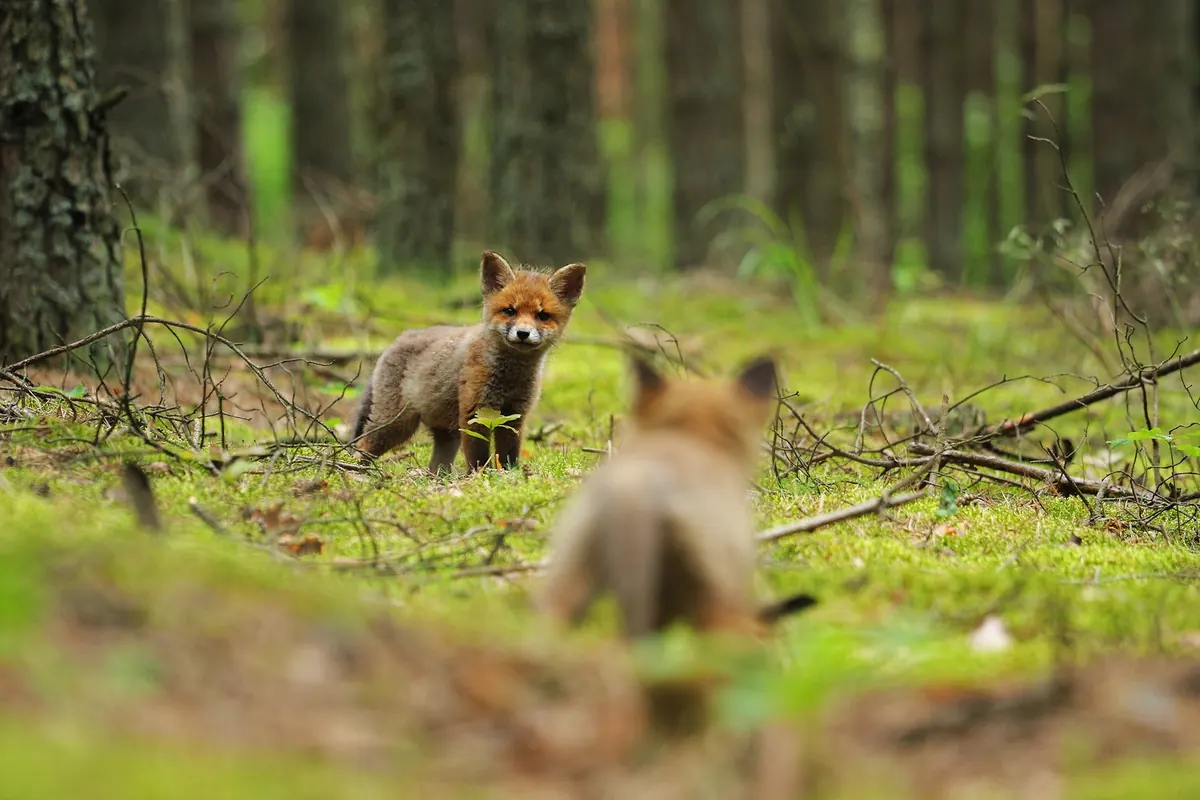
Newborn cubs are blind, deaf and covered in dark, almost chocolate-brown fluff. They weigh barely more than a small bar of chocolate. A typical litter is four or five, though anything from one to nine happens. Most British cubs arrive between mid-March and mid-April, with occasional litters into May. For the first fortnight the vixen stays below ground, and the dog fox brings food — sometimes leaving it at the entrance for her rather than going in.
From late April the earth becomes crowded, and the vixen will move cubs one at a time if she feels threatened. This is exactly why you should not go poking around a suspected earth in March or April. A vixen shifting a litter through unfamiliar gardens risks losing cubs to roads and dogs, and it is a stressful business for no good reason.
If you want to watch, sit still and downwind, keep your distance, and avoid torches. Foxes are creatures of habit, so pick the same spot at the same time each evening and let them get used to you. Cubs start taking solid food at around three to four weeks — brought up by the adults, often regurgitated at first — and are fully weaned by about eight weeks. From three months or so they begin tagging along on hunting trips.
Most young foxes leave between October and January, though urban foxes often travel far less than people assume. In towns, a short move of a few streets is common; in the countryside, young dogs in particular may cover considerably more ground looking for a vacant territory. Road casualties among dispersing cubs are high, which is one reason fox numbers stay roughly stable despite decent litter sizes. If the foxes in your garden vanish in November, that is normal, not a disaster — it usually means the cubs have grown up and moved out, while the resident adults stay put.
Every spring, well-meaning people pick up fox cubs that did not need rescuing. A few sensible checks will help you get it right.
Foxes are not a protected species in the UK and there is no close season, but causing unnecessary suffering to a wild mammal is an offence, and disturbing a family group in spring is both unkind and counterproductive. If you are unsure about a fox or a cub, take advice from a wildlife rescue or a qualified vet before intervening. Otherwise, the best thing you can do is watch from a distance, keep the noise down, and enjoy a few weeks of the best free wildlife television Britain has to offer.
Photo: Piotr Kucharzewski / Pexels