Trending


Ask ten people what a fox eats and you'll get ten different answers: chickens, bin bags, blackberries, next door's cat. The reality is both duller and more impressive. The red fox is a generalist — an opportunist that treats the British countryside and the British suburb as one long, changing buffet.
What ends up in a fox's stomach depends on where it lives and what month it is. A rural fox in Devon and an urban fox in Leeds may eat quite different things, and both will change their menu several times a year. Here's how the fox's year looks, season by season.
Foxes are omnivores with a carnivore's equipment: sharp teeth, strong jaws, and a gut that copes perfectly well with fruit, insects and earthworms as well as meat. They hunt alone, mostly between dusk and dawn, and rely on excellent hearing to pinpoint small prey moving under grass or soil.
The list of what a fox will eat is long because it eats what is there. Small mammals — voles, mice, rats — form the backbone of most diets, with everything else layered on top according to what the week offers.
A country fox with a large territory and plenty of hedgerow takes more wild food: rabbits, field voles, beetles, fruit. A town fox with four gardens and a wheelie bin outside the takeaway scavenges far more. Most foxes sit somewhere in between. Either way, foxes cache food — burying or hiding surplus in soil, under leaves, or in a flowerbed — and come back for it later. In autumn, when fruit falls faster than they can eat it, this habit really shows.
March to May is the hungriest stretch of the year. Cubs are usually born in March or April, and the vixen is nursing, so both parents need to carry food back to the den.
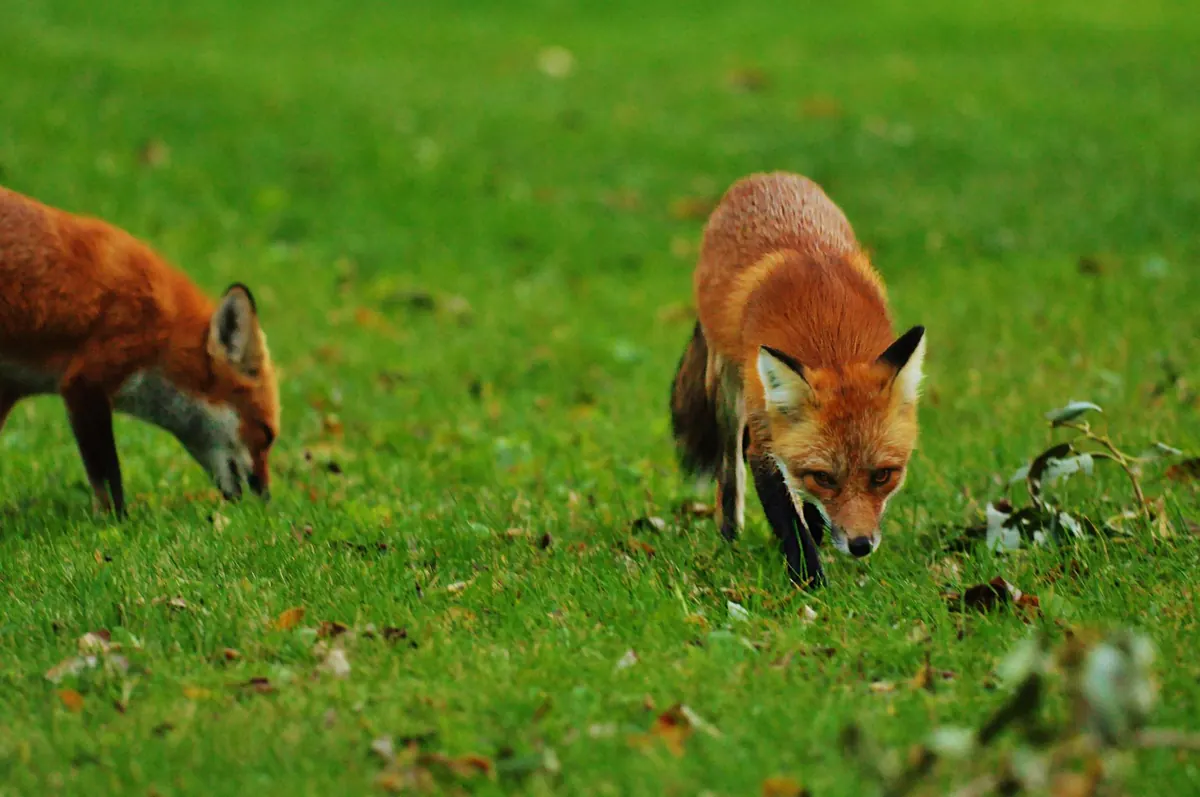
After rain, lawns and fields are rich in earthworms, and foxes will work a single lawn for a long spell, head down like a dog following a scent. Beetles and grubs rise closer to the surface as the soil warms. Ground-nesting birds — lapwings, curlews, meadow pipits — are laying, and their eggs and chicks are easy meals. Frogs and toads heading for ponds are taken too, along with the first young rabbits of the year. Roadkill becomes common as young animals disperse. In sheep country, some foxes take afterbirth and dead lambs, and newborn lambs are occasionally taken, which is why foxes remain a difficult subject for many farmers.
By June the fox's world is busy with food. Young rabbits are everywhere and not yet quick. Fledgling birds are clumsy. Insects peak — beetles, moths, craneflies, caterpillars and grasshoppers all get eaten, and a fox will happily hoover up a hatch of cockchafers on a warm evening.
Fruit starts arriving as well: the first cherries, strawberries and early plums, plus garden windfalls. In towns, summer brings a different kind of plenty — leftover takeaways, food dropped in parks, bins left out, compost heaps, and pet food put down for cats. Bird feeders are raided for fat balls and peanuts, and spilled seed underneath draws in rodents, which in turn draw in foxes.
September to November is the best time to watch a fox forage rather than hunt. Hedgerows, orchards and gardens are heavy with fruit, and foxes eat a surprising amount of it. Look for:
They'll also take grain from stubble fields, nuts and the last insects of the season. What they can't eat, they cache, so you may find fruit buried along borders and lawn edges — often dug up again weeks later when the weather turns.
December to February is the leanest stretch, and foxes respond by eating almost anything they can find. Voles and mice stay on the menu, since they remain active under snow and leaf litter, but carrion becomes important: dead deer, sheep, rabbits and birds, plus roadkill. That constant search for food is one reason foxes are so visible in winter, along with the mating season, when vixens scream and dog foxes bark through the night.
Garden feeding helps them through the cold. Where peanuts, fat balls and seed are put out for birds, foxes take the scraps, the fallen seed and sometimes the birds themselves. Bins, compost and food waste matter more now than at any other time of year. And if a fox buried food in autumn, it will be back to those spots in the frost.
The most common question about fox diet is whether foxes eat cats. Foxes and cats largely tolerate one another; an adult cat is a serious opponent with claws and teeth, and a fox's usual response is to keep its distance. Foxes certainly eat cat food, and they will take unprotected kittens if they find them, but the idea that foxes routinely hunt adult cats doesn't match what most people observe.
Two more myths worth clearing up. Foxes don't eat grass as a food source, though they do nibble it. And milk is not a treat: it gives most wildlife diarrhoea. Water is always the better offering.
Feeding foxes is a personal choice, and it's worth a word with neighbours first, particularly anyone who keeps chickens or rabbits. If you do feed, keep it modest and simple.
Feed little and often, and don't panic if your visitor vanishes for a few days. Foxes roam widely, and a full bin round the corner is often more interesting than your garden.
Photo: Eve R / Pexels